[ The Problem ]
The fashion industry contributes 10% of global carbon emissions yet hides its practices behind sustainability marketing. Consumers discard clothes after an average of 7 wears — 66% end up in landfills. The challenge: build a platform that makes brand sustainability transparent and actionable, and motivates consumers to donate and recycle.
UI/UX course project at Singapore University of Technology and Design (SUTD) — 4 months, including research, prototyping, and user evaluation rounds.
Data Gathering
Our approach to data gathering combined extensive literature research and targeted surveys among young adults in Singapore. This allowed us to understand sustainability challenges in the fashion industry, specifically tailored to the context of young adults in Singapore.
- Literature Research: The fashion industry, contributing 10% of global carbon emissions, lacks transparency in sustainability practices, with over 90% of companies not disclosing essential processes. In addition, in the U.S., individuals discard 37 kg of clothes annually, with 66% ending up in landfills, typically after only 7 wears.
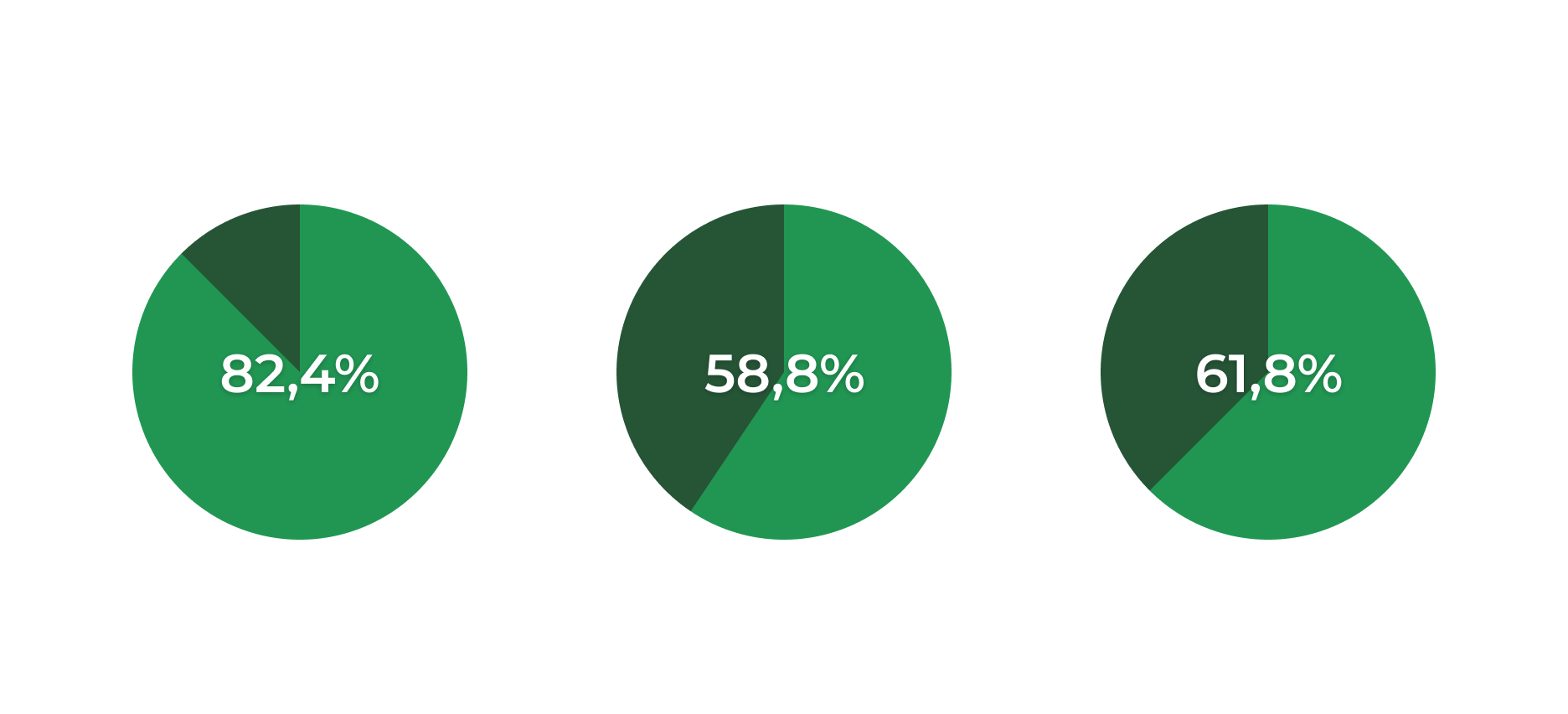
- Survey insights: Surveys targeting individuals aged 15-24 revealed that 51.6% discard clothing, and only 4% is recycled in Singapore. Barriers to recycling include a lack of convenient options (82.4%), uncertainty about processes (58.8%), and concerns about transparency (61.8%). The demand for recycling incentives and knowledge about sustainable brands was notably high.
Target Users
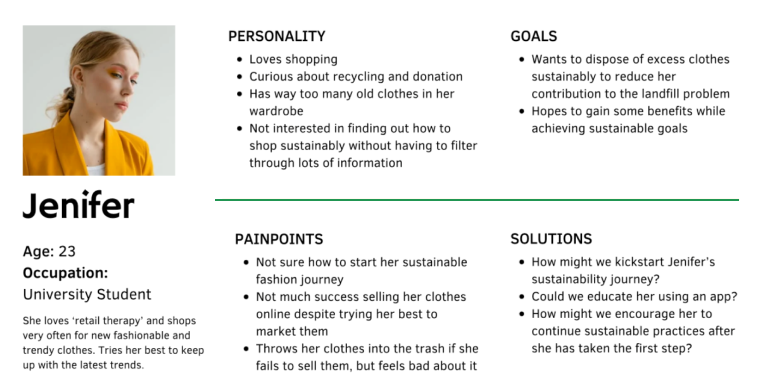
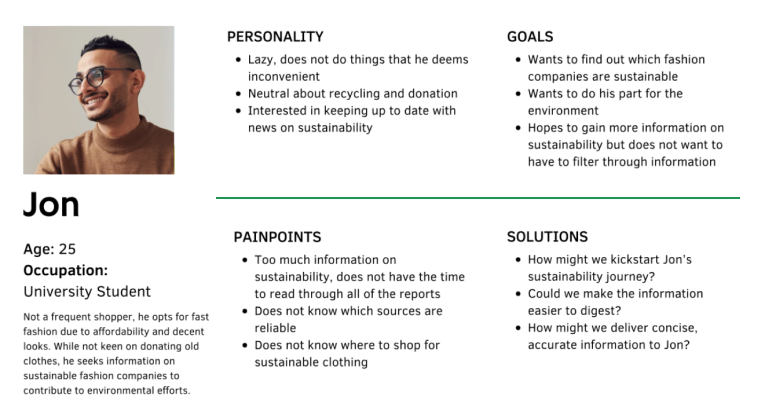
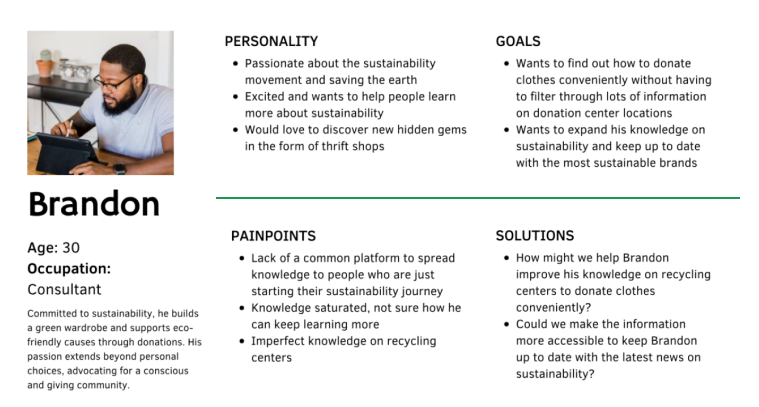
We identified three user groups with distinct motivations — each requiring a different entry point into the platform.
- Primary Users: Our primary users fall into two distinct groups: those interested in donations but not sustainability rankings, and those interested in sustainability rankings but not donations.
- Secondary Users: Interested in both sustainability rankings and donations, these users benefit from in-depth statistics and active community engagement through brand reviews.
- Supplemental Users: While our focus is on serving interested users, we also recognize the presence of non-interested users. Our platform aims to influence positive change even among those initially uninterested.
Prototyping & User Testing
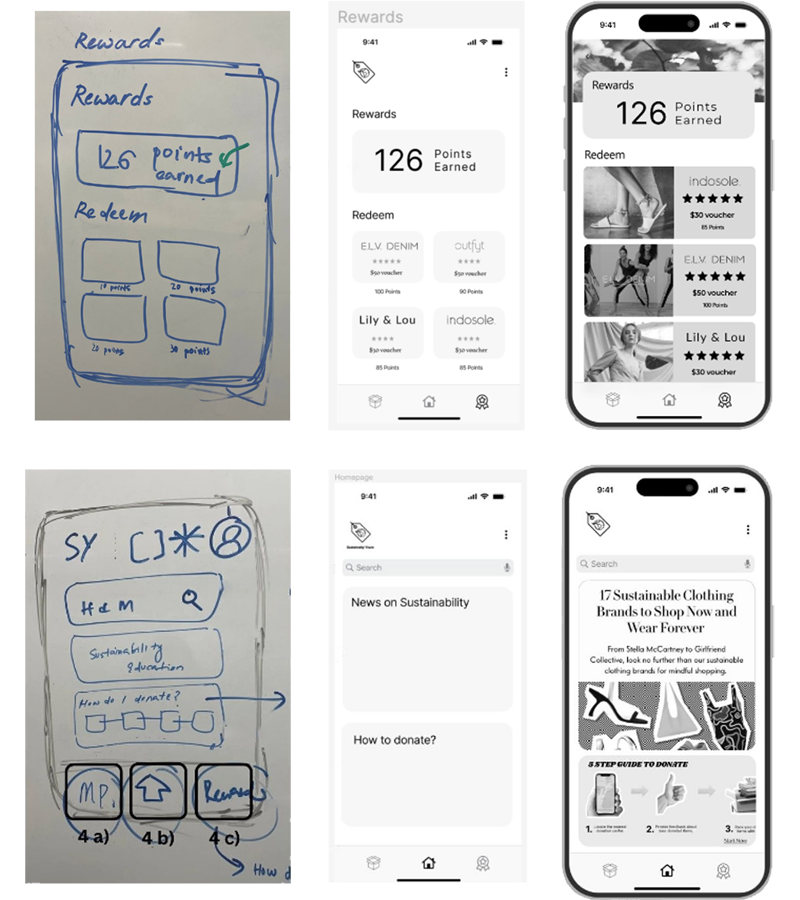
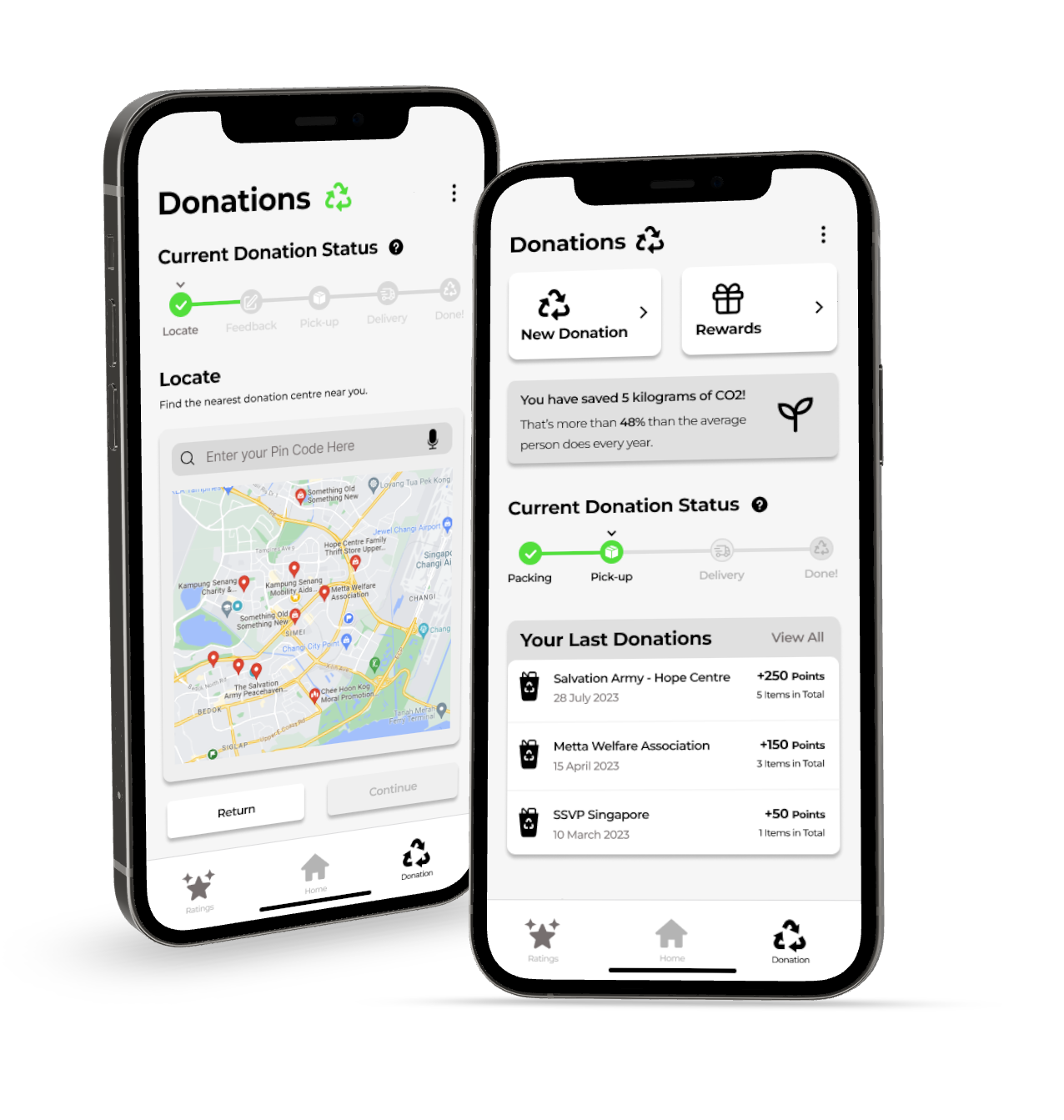
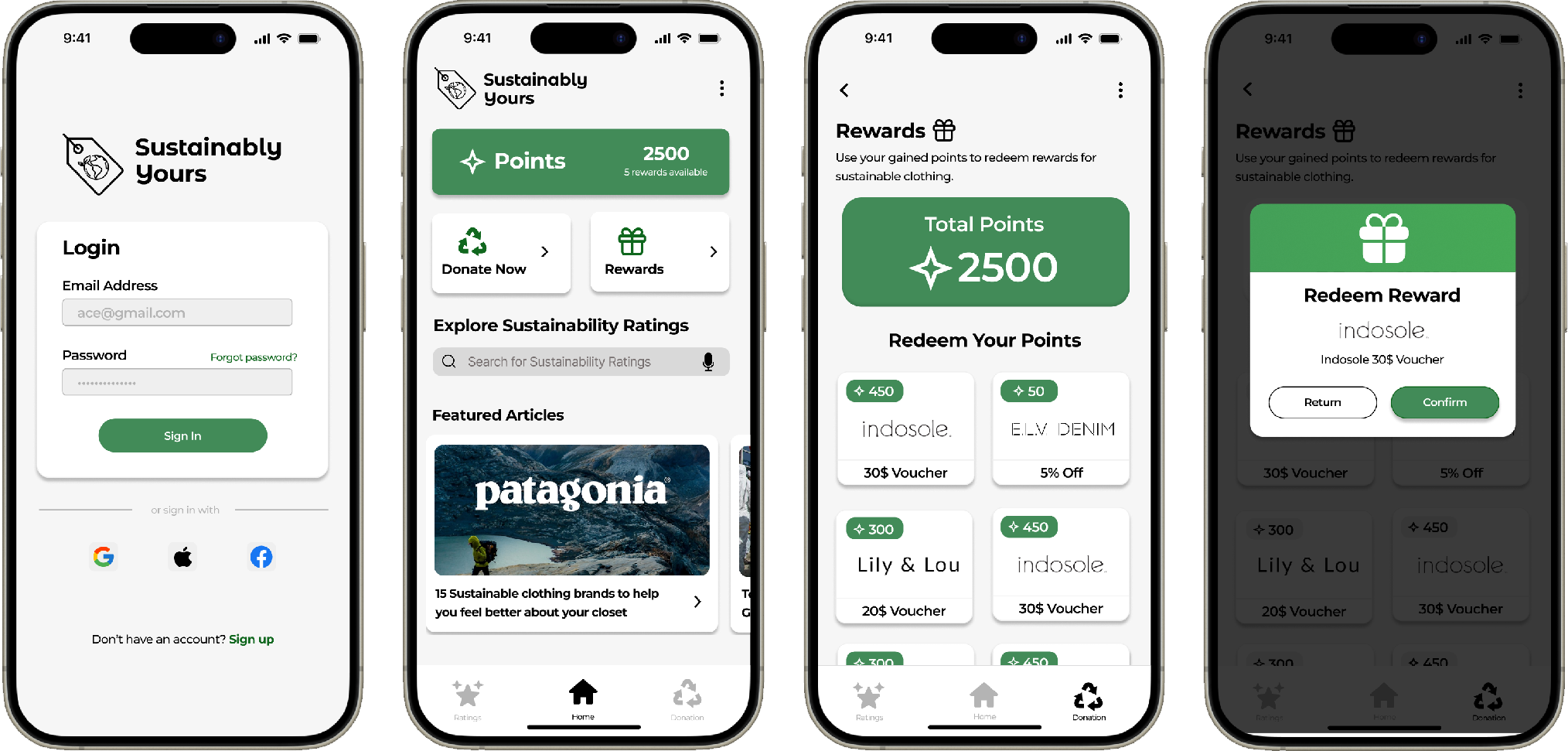
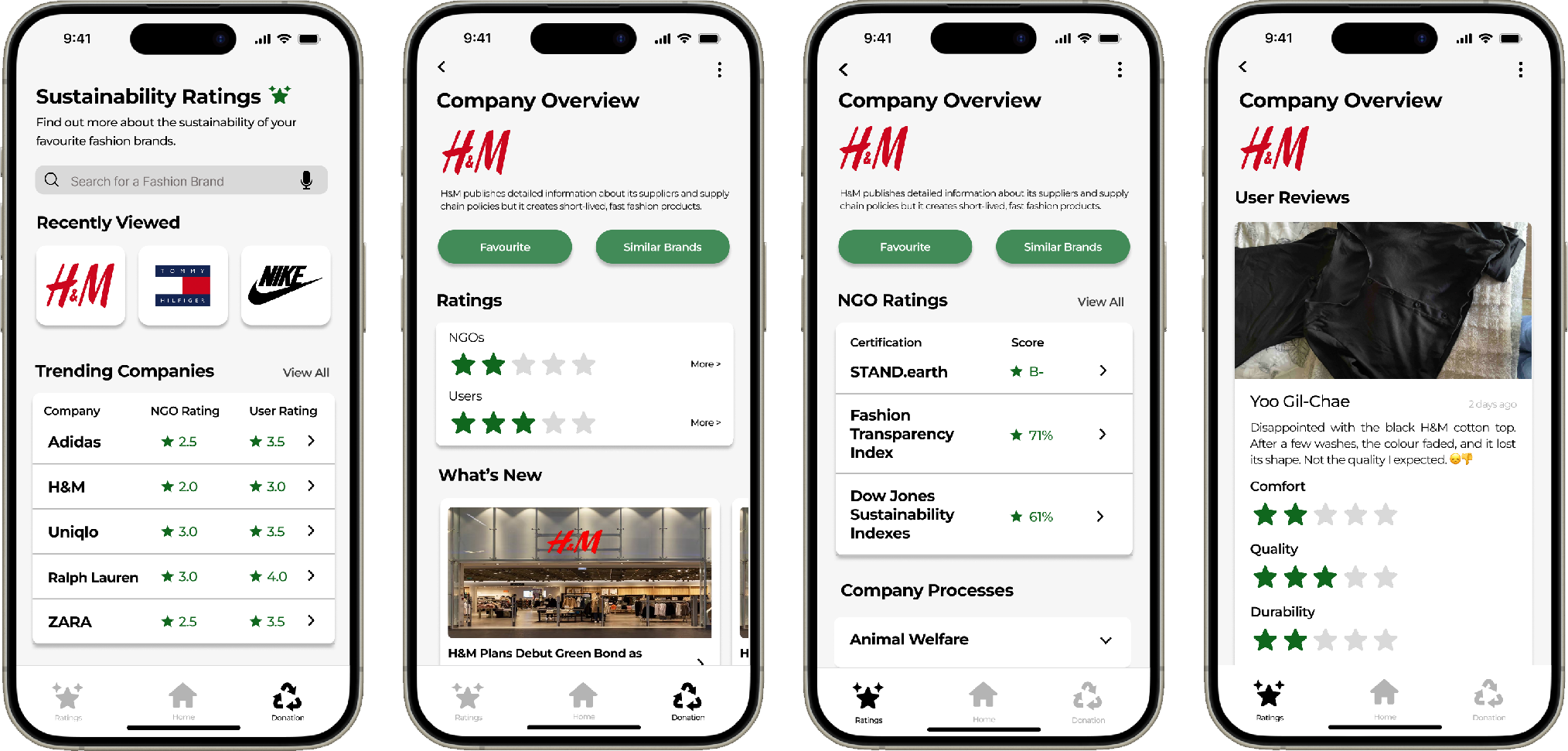
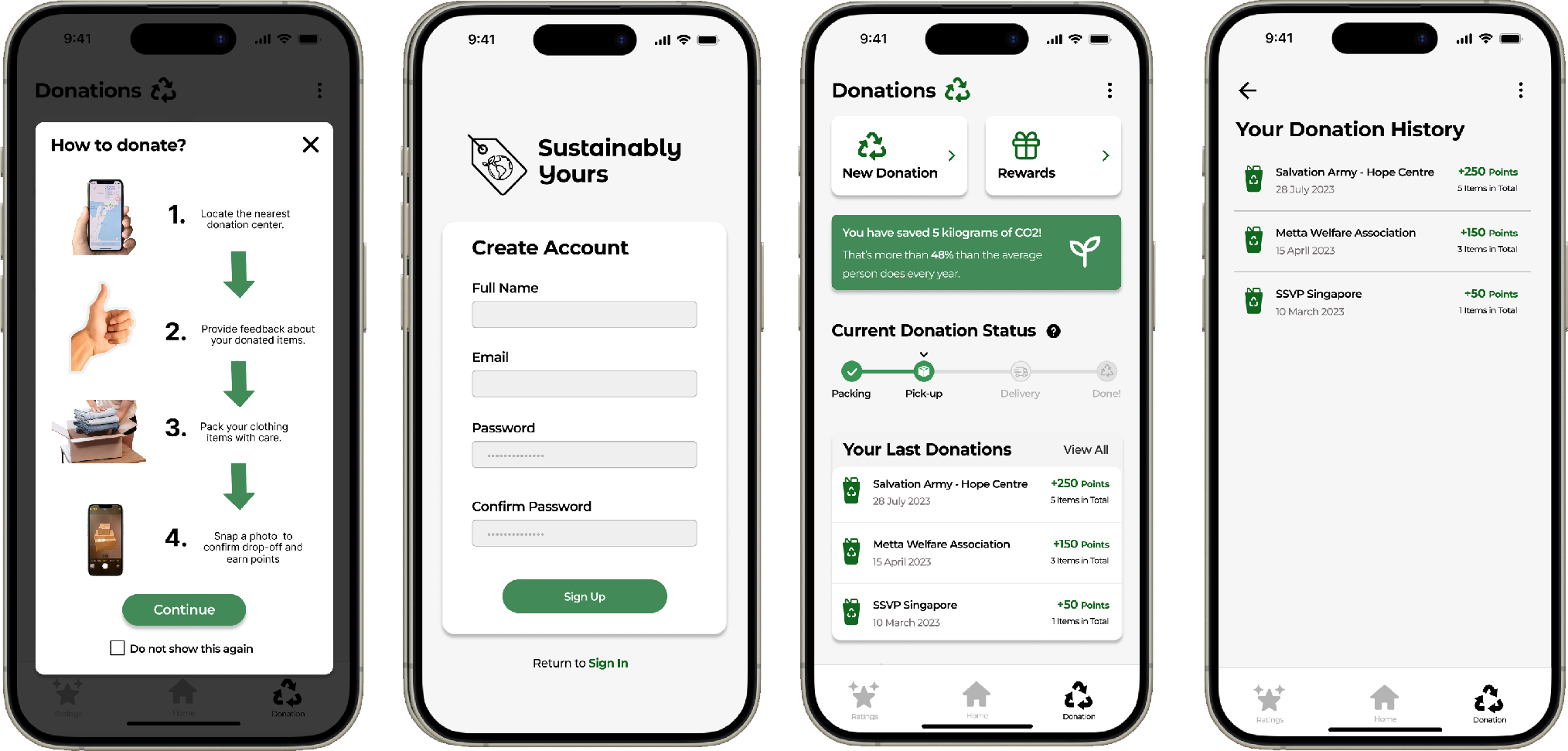
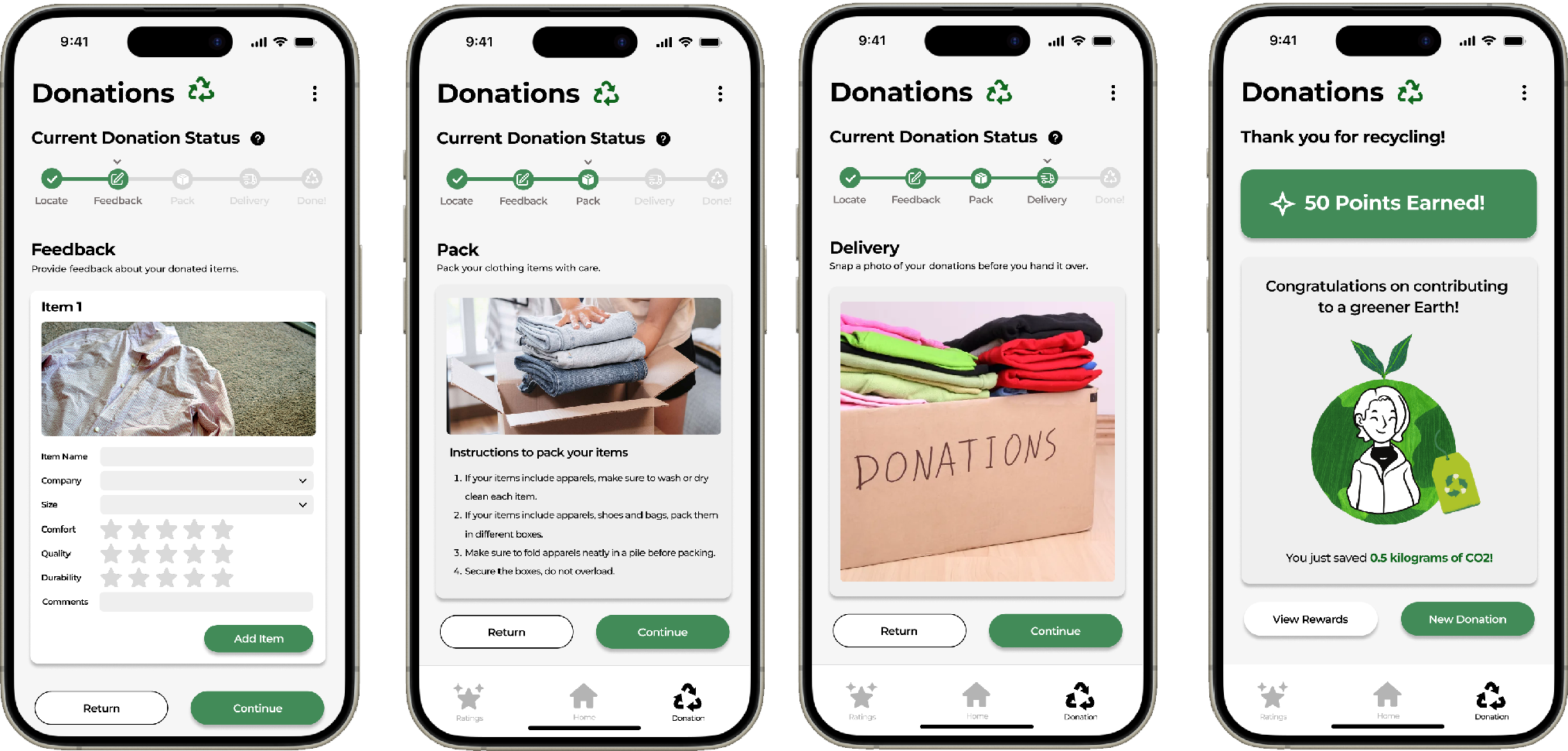
From whiteboard sketches to Figma low-fi prototypes, we designed and tested three core flows: donating clothes, searching sustainability ratings, and receiving rewards.
We conducted tests after each prototype to understand our user preferences, behaviors and expectations. The iterative nature of the testing process allowed for refinement based on user feedback to improve the app's functionality and user experience.
- User Testing and Evaluation I: Two tests, Sustainability Rating Awareness and Donation Behavior, revealed insights into user preferences. Valuable insights were gained for refining design elements such as improving feedback of the app and simplifying user journeys.
- User Testing and Evaluation II: The second round assessed usability and user experience using Useberry, involving diverse personas. The System Usability Score (SUS) of 79.8 reflected decent usability, with potential enhancements for sustainability-focused users.
Results
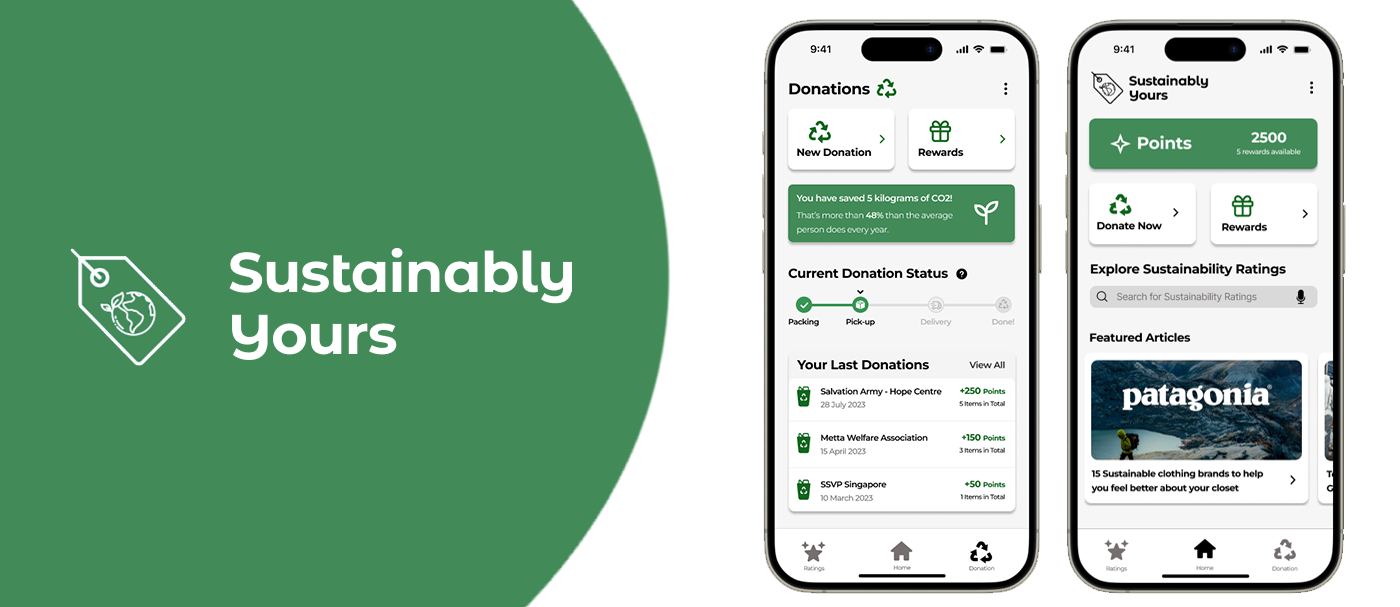
After two rounds of user testing and iteration, we fine-tuned the interface and overall experience. The final product received top marks. My primary responsibilities were leading the prototyping process and deriving insights from evaluation data.
79.8System Usability Score
3User Flows Designed
2×Testing Rounds